
Wednesday One Thing - 250 Years of American Genius
Wednesday One Thing - 250 Years of American Genius


250 Years of American Genius
This Fourth of July, skip the small talk about hot dogs and fireworks for a second. Talk about this instead.
In 250 years, one country — a country that didn't exist until a group of farmers, lawyers, and printers decided to bet everything on an idea — produced more world-changing innovation than arguably any nation in human history. Not just gadgets. Not just conveniences. The actual infrastructure of modern life: how we light our homes, talk to each other, move our bodies through the sky, keep our hearts beating, and carry the sum of human knowledge in our pocket.
Most Americans don't know the half of this list. I didn't either, until I went looking. So here it is — by decade, as close to chronological as the record allows, with credit given honestly (because the real story is more impressive than the myth).
A quick note before you read: a few of these "American" inventions actually started somewhere else and were perfected, commercialized, or scaled here — and I think that's actually the more interesting story. America's superpower was never just raw invention. It was turning a fragile idea into something that works, that ships, that changes how a billion people live. Keep that in mind as you read.
The Real "One Thing": None of This Happens Without the Constitution
Before the list, here's the point underneath the list.
None of what follows — the lightbulb, the airplane, the Moon landing, the iPhone, any of it — happens without the document that made "America" a coherent thing in the first place. Not the land. Not the people. The Constitution. It's easy to treat the Constitution as background scenery to the real story of American innovation, but it's actually the load-bearing wall. Article I, Section 8 — the clause that guarantees inventors the right to their own discoveries — isn't a footnote on this list, it's the reason the list exists at all. Without a stable, durable system of government that protected property, enforced contracts, and gave ordinary people a legal claim to the fruits of their own ingenuity, there's no Edison, no Wright Brothers, no Bell Labs, no Silicon Valley, no SpaceX. The innovation didn't happen in spite of American government. It happened because of it.
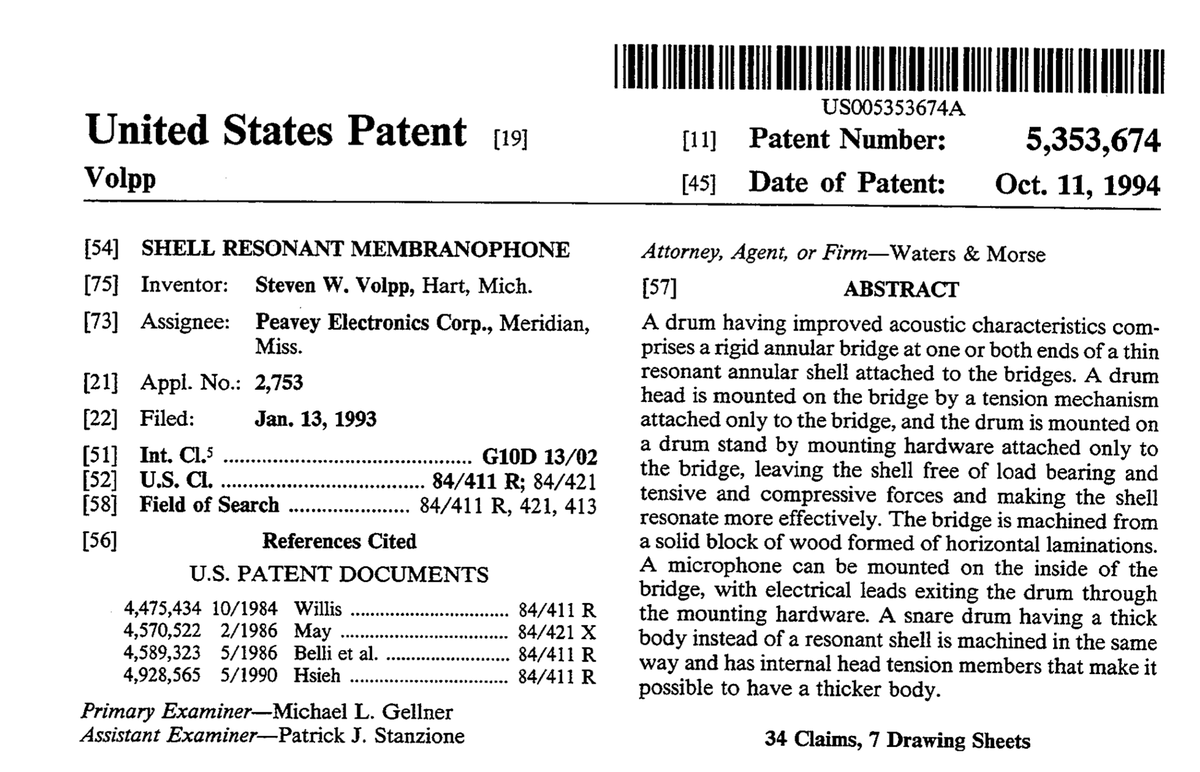
Without I, Section 8 of the constitution to protect me, my life would have been very different. The fact that I could patent an idea, which meant I owned an idea, allowed me to fortify the lives of many people all over the world.
And it's worth being precise about what kind of government that is, because the popular framing has gotten muddled: America is a republic — a constitutional, representative republic — not a democracy, and we never have been. That's not a technicality. A pure democracy is majority rule with no structural brakes on it; a republic is rule of law first, with elected representatives operating inside a written framework that limits what any majority, in any given moment, is allowed to do to the minority or to the individual. That structure — checks and balances, separation of powers, enumerated rights that aren't up for a popularity vote — is precisely what gave inventors, entrepreneurs, and ordinary citizens the confidence that the rules wouldn't simply change beneath them because a mob or a monarch felt like it. No other system of government in human history has produced a 250-year run like the one in the list below. Not because Americans are smarter than everyone else, but because the Constitution built a machine that rewards risk-taking and protects the risk-taker.
That doesn't mean the founders got everything right — they didn't, and pretending otherwise does the country a disservice. Slavery was written into the founding compromise. Women couldn't vote. Property requirements kept huge swaths of the population out of the process entirely. That list of failures could run a lot longer than this newsletter has room for. But here's the other half of the story, the half that's just as important: the same Constitution that contained those flaws also contained the mechanism to fix them. It was built to be amended, argued over, and improved — and over 250 years, it was. The 13th, 14th, 15th, and 19th Amendments aren't proof the founders failed; they're proof the system they built actually works the way it was designed to. Most governments in history don't survive their own contradictions. Ours has — repeatedly — because it was built to bend without breaking.
That's the genius. Not that America got everything right from day one, but that it built the only kind of government durable enough, flexible enough, and free enough to produce 250 uninterrupted years of people turning ideas into reality — and to keep correcting itself along the way. If you want a gut check on just how much of daily life depends on what that system made possible, try going a week without your microwave. Try a week without your smartphone. The list below isn't an accident of geography or luck. It's downstream of a piece of parchment from 1787 that, against the odds, still works.
Benjamin Franklin, fresh off his kite experiment, invents a device that protects buildings from fire caused by lightning strikes. The country wasn't even a country yet, and Americans were already rewriting the relationship between humans and nature.
Often overlooked, but this might be the most important "invention" on this list: a constitutional guarantee (Article I, Section 8) that protects inventors' rights, creating the legal and economic engine that made everything below possible.
Eli Whitney's machine transforms American agriculture and the entire global textile economy — for better and, tied to slavery's expansion, for profoundly worse. Worth including honestly, not just celebrated.
Oliver Evans, the "father of refrigeration," designs the first vapor-compression refrigeration concept.
Cyrus McCormick's mechanical reaper and Samuel Colt's revolver reshape farming and weaponry within the same decade.
Samuel Morse sends "What hath God wrought" over a wire from Washington to Baltimore, instantly connecting the country in a way previously unimaginable.
The first public demonstration of ether as a surgical anesthetic, at Massachusetts General Hospital, transforms surgery overnight — operations that had to be brutally fast (and often unsurvivable from shock alone) could now be slow, careful, and far more successful. It's hard to overstate how much of modern medicine, from organ transplants to open-heart surgery, depends on this single innovation.
Elias Howe patents the lock-stitch machine, eventually industrialized by Isaac Singer — moving garment-making out of the home and into the factory.
Charles Goodyear's process makes rubber usable in everything from tires to footwear.
Alexander Graham Bell's invention makes instantaneous long-distance voice communication possible for the first time in human history.
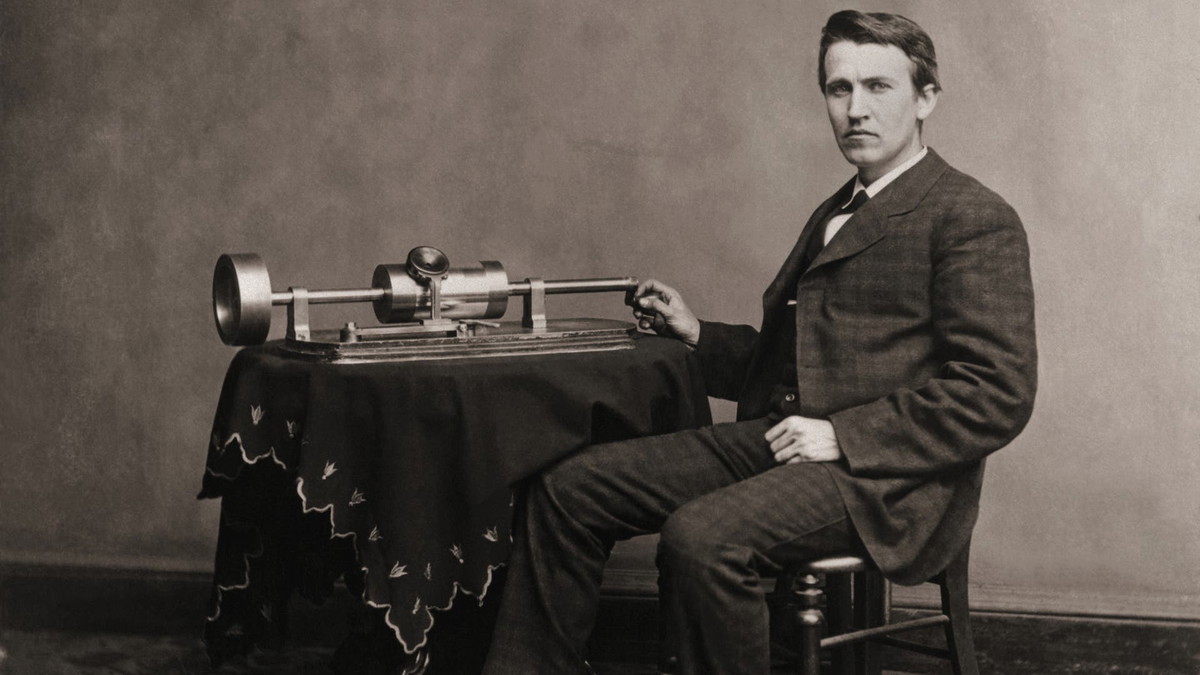
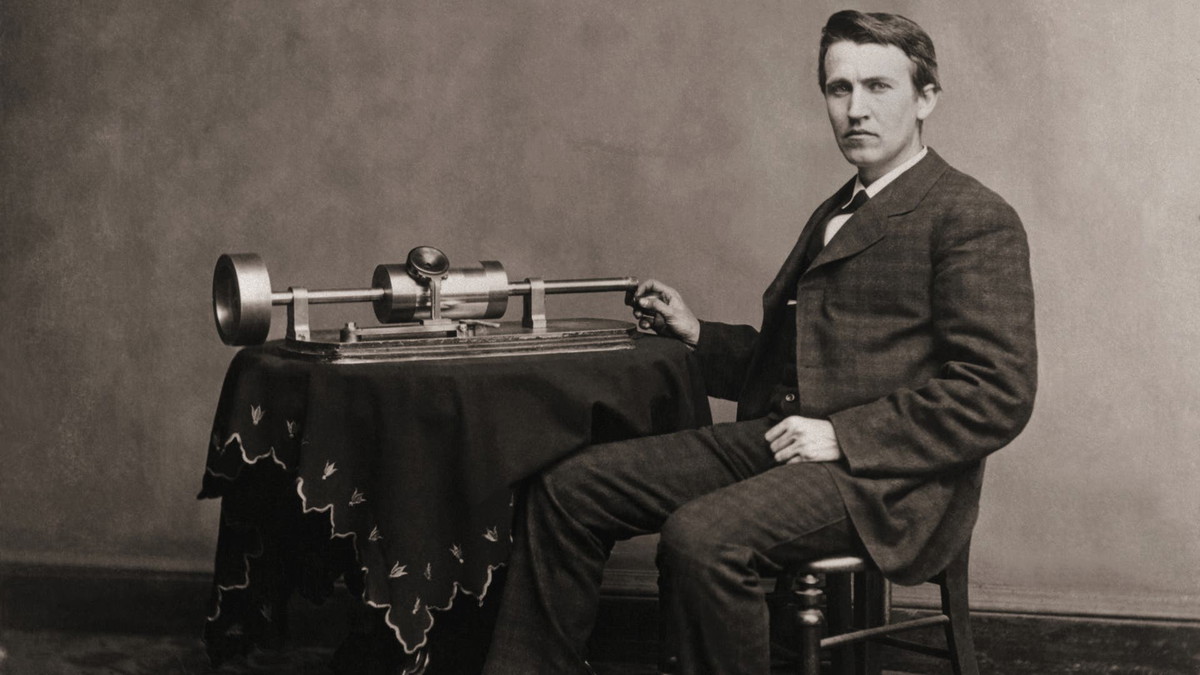
Thomas Edison invents the first device that can both record and play back sound.
Here's the honest version: Edison didn't invent the concept of the incandescent bulb — inventors in Britain and elsewhere had been working on it for decades. What Edison and his Menlo Park team actually did was solve the system: a durable filament, a strong vacuum, and — critically — an entire electrical generation and distribution network to power it at scale (Pearl Street Station, 1882, the world's first commercial power plant). He didn't just light a bulb. He electrified a civilization. That's a bigger achievement than the popular myth gives him credit for.
Nikola Tesla (a naturalized American by the time of his major work) pioneers high-frequency electrical experimentation that underlies modern radio and wireless transmission.
Miller Reese Hutchison invents the first practical electric hearing aid — a small device with an outsized impact on the lives of millions of people with hearing loss, decades before anyone had heard of "assistive technology" as a category.
Willis Carrier invents the first modern system for controlling temperature and humidity indoors, eventually transforming where and how humans can live and work — the American Sun Belt as we know it doesn't exist without this.
The Wright Brothers achieve the first sustained, controlled, powered flight at Kitty Hawk. Humanity leaves the ground for good.
Henry Ford doesn't invent the automobile, but his assembly line makes mass production — and the modern consumer economy — possible, putting the car within reach of ordinary people.
Gideon Sundback, a Swedish-American engineer working in Pennsylvania, perfects the interlocking-tooth design that becomes the modern zipper, patented in 1917 — a small fastener that quietly reshapes clothing, footwear, and luggage worldwide.
Clarence Saunders's Piggly Wiggly introduces "self-service" shopping, the model nearly every grocery store on Earth still uses.
American researchers build the first device able to restore a normal heart rhythm using an electric shock — bulky and experimental at first, but the direct ancestor of the defibrillators in every ambulance, ER, and airport AED cabinet today.
Ruth Wakefield's recipe, first published this year — proof that not every world-changing American innovation was about war or industry.
Enrico Fermi's team in Chicago opens the door to both nuclear power and nuclear weapons — arguably the most consequential and morally weighty scientific achievement of the century.
The Manhattan Project, centered in Los Alamos, ends World War II and begins the nuclear age — a milestone whose weight cuts both ways, and is worth sitting with rather than just celebrating.
Percy Spencer, a self-taught engineer at Raytheon, notices a candy bar melting in his pocket while testing radar equipment, investigates, and accidentally invents an entirely new way to cook — commercialized as the "Radarange" in 1947, though it would take another two decades before a version was small and cheap enough for home kitchens.
Willard Libby develops the technique that lets scientists date organic material by measuring carbon decay — a discovery that quietly rewrites archaeology, geology, and our understanding of human history, and earns Libby the 1960 Nobel Prize in Chemistry.
Bell Labs scientists invent the device that replaces bulky vacuum tubes and becomes the literal foundation of every computer, phone, and piece of modern electronics that follows. If you had to pick the single most important invention on this entire list in terms of downstream impact, this might be it.
Edwin Land's instant photography, a small joy that changed how people captured memory.
"Sierra Sam," the first crash-test dummy, gives engineers a reliable way to study how the human body responds to impact — the unglamorous innovation behind seatbelts, airbags, and nearly every advance in vehicle safety since.
Surgeons in Boston perform the first successful human-to-human organ transplant, a kidney swapped between identical twins, opening the entire field of transplant medicine. Liver, heart, and pancreas transplants would follow by the late 1960s.
George Devol designs the "Unimate," later commercialized by fellow American Joseph Engelberger — the birth of industrial robotics, and the ancestor of every assembly-line robot arm in a factory today.
Jack Kilby's integrated circuit (alongside Robert Noyce's parallel work) packs multiple transistors onto a single chip — the literal birth of the microchip.
Theodore Maiman builds the first working laser at Hughes Research Laboratories, a technology now in everything from eye surgery to fiber-optic internet to your DVD player (if you still have one).
Wilson Greatbatch and Dr. William Chardack implant the first fully implantable cardiac pacemaker in a human patient at a Buffalo VA hospital — a device built by hand in a barn workshop that went on to save millions of lives, and earned the National Society of Professional Engineers' recognition as one of the two greatest engineering contributions to society of the century.
This stretch deserves its own section, because compressing it into a single bullet point undersells what actually happened. In a little over a decade, the United States built a space program from nothing and used it to do something no civilization had ever done before.
Eisenhower signs the National Aeronautics and Space Act, creating the agency in direct response to the Soviet Union's Sputnik launch.
Alan Shepard's 15-minute suborbital flight is followed, just three weeks later, by President Kennedy's announcement that America would land a man on the Moon before the decade was out — an audacious goal made when NASA barely had a rough plan for how to do it.
Three laps in under five hours, matching the Soviets' earlier orbital achievement and proving the US could compete.
On July 20, 1969, Neil Armstrong and Buzz Aldrin become the first humans to set foot on another world, watched by an estimated 530 million people — roughly a fifth of the planet's population at the time. The Saturn V rocket that got them there achieved a perfect record across thirteen launches: zero catastrophic failures. Five more crewed landings followed through 1972, and to date, every single human being who has ever walked on the Moon did so as part of the American Apollo program — twelve people, all American, and no one else since.
After an oxygen tank explosion crippled the spacecraft en route to the Moon, Mission Control improvised a survival plan in days — including jury-rigging carbon dioxide filters out of cardboard, plastic bags, and tape — and brought all three astronauts home alive. It remains one of the most studied examples of crisis engineering in history.
American computer scientist Alan Kay designs the "Dynabook" concept — a thin, two-pound portable computer meant for children — a decade before the hardware to actually build one existed. It would take until 1981 for Adam Osborne's Osborne 1 to become the first laptop to actually reach the market, but every laptop since traces its DNA back to Kay's original sketch.
Funded by the Department of Defense, the first message is sent between UCLA and Stanford — the literal first heartbeat of what becomes the internet.
Ray Tomlinson sends the first networked email and invents the use of "@" to separate user from machine — a symbol now typed billions of times a day worldwide.
Intel's 4004 puts an entire computer processor on a single chip, the foundation of every PC, laptop, and smartphone since.
Vint Cerf and Bob Kahn design the communication protocol that lets independent networks talk to each other — the technical backbone that turns "a network" into "the internet."
The Department of Defense develops satellite-based positioning, later released for civilian use — now silently guiding everything from your phone's maps to commercial aviation to precision farming, worldwide.
Launched in 1977, Voyager 1 becomes the first human-made object to reach interstellar space in 2012 and is, as of today, still transmitting data from outside our solar system — a 45-plus-year-old piece of American engineering now farther from home than anything else humans have ever built.
Apple and IBM (with Microsoft's software) take computing out of labs and into homes and offices around the world.
The world's first reusable crewed spacecraft flies 135 missions over three decades, building the International Space Station, deploying Hubble, and keeping a permanent American presence in low Earth orbit — alongside real tragedy, with the loss of Challenger (1986) and Columbia (2003) and their crews, a cost worth remembering honestly alongside the achievements.
A joint effort with the European Space Agency, Hubble gives humanity its clearest-ever view of the universe — more than 1.5 million observations and counting, fundamentally reshaping our understanding of how the cosmos works.
Larry Page and Sergey Brin's "crawler" at Stanford becomes the search engine that organizes the entire internet.
Wireless internet, developed for years prior, becomes a consumer product — the thing your house runs on right now.
Apple's release doesn't just create a new product category — it fuses the phone, the computer, the camera, and the internet into a single device that ends up in the pockets of billions of people on every continent.
A global collaboration, with major American research institutions playing a central role, gives humanity a precision tool to edit DNA itself — opening the door to curing genetic disease.
On December 21, 2015, SpaceX's Falcon 9 booster makes a controlled vertical landing back on Earth after launching to orbit — the moment that proves rockets don't have to be single-use, multimillion-dollar trash.
Tesla's Model S and Model 3 prove that EVs can be both desirable and mass-market, accelerating a global shift in the auto industry.
It's tempting to think the big, history-book inventions are all in the past. They're not. Here's what's happened just since 2017 — within the last decade:
SpaceX launches the most powerful operational rocket in the world at the time, with two of its three boosters landing back on Earth simultaneously — a sight that looked like science fiction and wasn't.
SpaceX's Crew Dragon becomes the first commercial spacecraft in history to carry humans to the International Space Station — and the first time American astronauts launched to orbit from American soil since the Space Shuttle retired in 2011.
The core mRNA modification technology came from American scientists Katalin Karikó and Drew Weissman at the University of Pennsylvania (work that won the 2023 Nobel Prize). Moderna — a Massachusetts company — built a vaccine from scratch in record time. The 2020 emergency authorizations marked the first time an mRNA vaccine had ever been approved for use against any disease: a genuinely new category of medicine deployed to hundreds of millions of people within a year of a gene sequence being published.
OpenAI's ChatGPT, built on research largely originating at American labs, kicks off the fastest consumer technology adoption in history and resets the global conversation about computing itself.
SpaceX's Starship — taller than the Saturn V that took Apollo to the Moon — begins flight testing. It's designed for full reusability of both stages, aiming to cut launch costs by another order of magnitude.
Intuitive Machines' Odysseus lander achieves the United States' first soft Moon landing in over 50 years and becomes the first successful landing of a privately owned spacecraft on the lunar surface — a feat previously achieved only by national space programs.
Firefly Aerospace's Blue Ghost lander achieves the first fully successful commercial Moon landing. SpaceX alone launches 165 orbital missions — roughly 85% of all U.S. launch output for the year — a single American company now out-launching most countries on Earth combined.
Falcon 9 captures roughly 90% of global commercial orbital launches, with the most-flown booster completing 34 missions — proof that the "land it and fly it again" idea, once dismissed as a fantasy, is now simply how spaceflight works.
So What?
Set this list next to almost any other nation's 250-year run and it's hard to find a comparison. Most countries that old are still telling the story of one golden age — a Renaissance, an empire, a single century of dominance. America's story is different: it's a near-continuous 250-year streak of "here's a problem, we'll solve it, and then the whole world will use what we built." And as that last section shows, the streak hasn't stopped — it's arguably accelerating.
The honest version of this story — including the parts where America improved on someone else's idea rather than inventing it from nothing, and including the parts (like the bomb, like the cotton gin) that carry real moral weight — is more interesting than the sanitized version. It's also, I'd argue, more flattering. A country that can take a half-finished idea from anywhere in the world and turn it into something that changes life for billions of people, over and over, for two and a half centuries, doesn't need the myth to be impressive. The truth already is. And underneath every single item on that list is the same constant: a republic stable enough, and self-correcting enough, to let it happen.
