
What's in a Name
What's in a Name

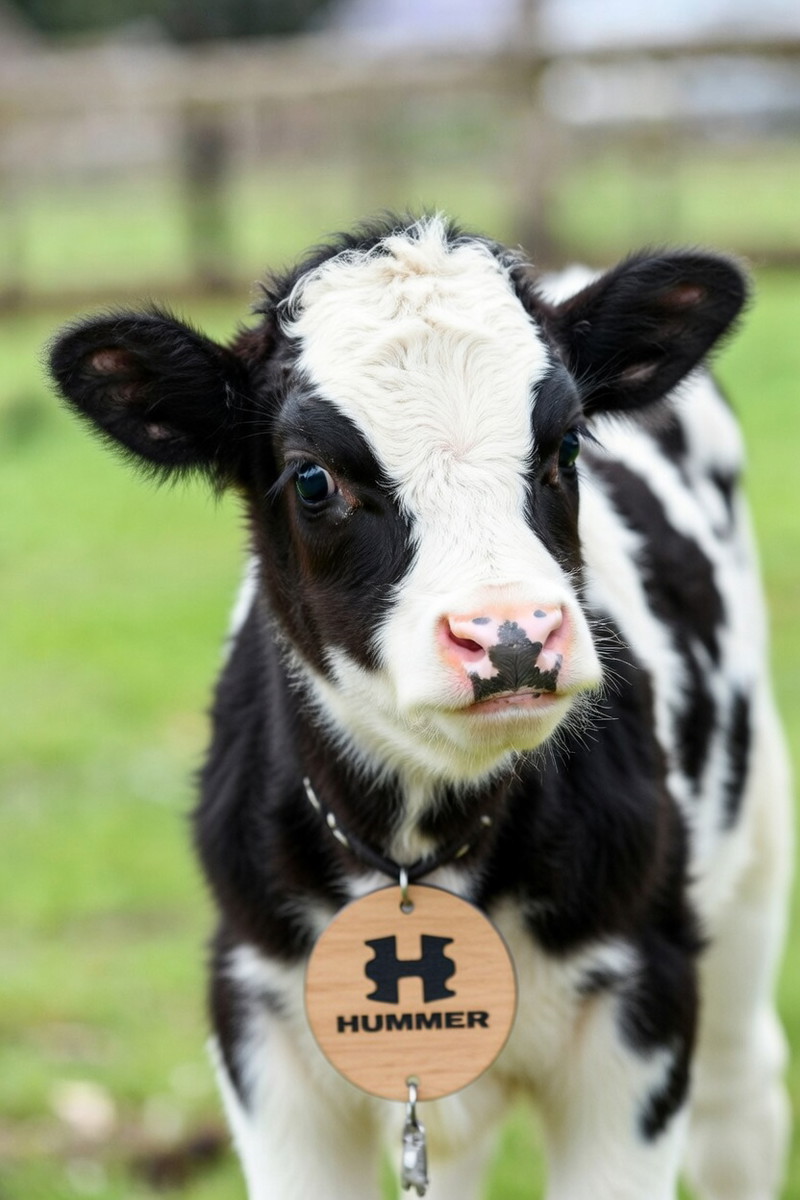
You would never order it if it was on the menu as what it actually is.
Let's start with veal.
If a restaurant menu said "Baby cow, raised in a crate so small it cannot turn around, specifically so its muscles never develop, then killed at a few months old" — you would put the menu down. You might never go back to that restaurant. You might look at the person across the table from you differently for ordering it.
But "Veal Parmigiana" sounds like a lovely evening out.
The word "veal" comes from Old French and Latin, meaning calf. It is a word specifically engineered to replace the thing it actually is. The distance between the word and the reality is not accidental. It is the entire point.
Hot dogs are perhaps the greatest naming achievement in the history of food marketing. A "hot dog" sounds fun. Festive. Ball games and backyard grills and childhood. But a hot dog is a tube of processed meat scraps — the parts of the animal that could not be sold as anything else — ground together, mixed with preservatives, and stuffed into a casing. The FDA literally permits them to contain something called "mechanically separated meat," which is exactly what it sounds like: carcass remains forced through a machine under pressure. If the ballpark vendor said "Mechanically separated meat tube, want one?" — you would not say yes. You would not say anything. You would just walk away.
Bacon is the masterpiece of the genre. Bacon has become a personality. There are bacon-themed everything. Entire restaurants built around it. People who describe themselves as bacon lovers the way others describe a religion.
Bacon is pig belly.
That's it. That is the complete and entire thing. Fried pig belly. If every menu in America made that substitution tonight, the cultural phenomenon collapses by morning.
But here's where it gets interesting. Because this trick isn't just for food.
In 2009, General Motors — one of the largest and most storied companies in American history — went bankrupt. Not struggled. Not downsized. Bankrupt. The United States government handed them $49.5 billion of your tax dollars to keep the lights on. It was, at the time, the largest industrial bankruptcy in American history.
As part of the humiliation of that moment, GM was forced to take their brands out back and shoot them. Pontiac — gone. Saturn — gone. Oldsmobile had already been put down in 2004 after 107 years. And Hummer — the military-inspired, planet-punishing, ten-miles-to-the-gallon monument to American excess — discontinued. Dead. Done.
The Hummer had become a cultural villain. At its peak it got roughly 10 MPG. People put bumper stickers on their Priuses mocking it. It was the poster child for everything wrong with Detroit's arrogance — big, wasteful, and completely out of touch with reality. When GM killed it in 2010, almost nobody cried.
Fast forward to today.
GM is now selling an electric vehicle. And they named it — and you cannot make this up — the Hummer.
The GMC Hummer EV.
Think about what just happened there. GM took the name of their most infamous failure. The name that became synonymous with waste and arrogance and the Detroit mindset that drove them directly into bankruptcy court. And they put that name on an electric vehicle — the exact technology that was supposed to represent the opposite of everything the Hummer stood for.
Why?
Because the name still means something. "Hummer" means big. Powerful. Dominant. Built for people who don't apologize. They're not selling you an electric truck. They're selling you the feeling of the word. They are betting — correctly, probably — that you will feel the old feeling without thinking the old thoughts.
It is veal parmigiana.
It is a hot dog.
It is a marketing department doing what marketing departments do: finding a name that makes you feel something, so that you won't stop to think about what the thing actually is.
And what the thing actually is, is a company that went bankrupt, took your tax money, killed a dozen brands over the years, and came back with the same name on a different product — hoping you forgot.
The name didn't change to inform you. It changed to make you forget.
There is a lesson in here that goes well beyond lunch and car shopping.
When something needs a new name — when a company rebrands, when a product gets relaunched, when a politician finds a new slogan, when a food gets renamed — ask yourself what the old name was.
The gap between what it was called and what it is being called now is exactly the size of what someone does not want you to think about.
Now let's fire up the grill and enjoy our hot dogs! I know I will, as I am just another human and not immune to this stuff either.
